Why sedentary developers need an exercise break every hour
Sitting for hours quietly costs developers their posture, focus, and long-term health. Here's the science — and how short, regular movement breaks fix it.
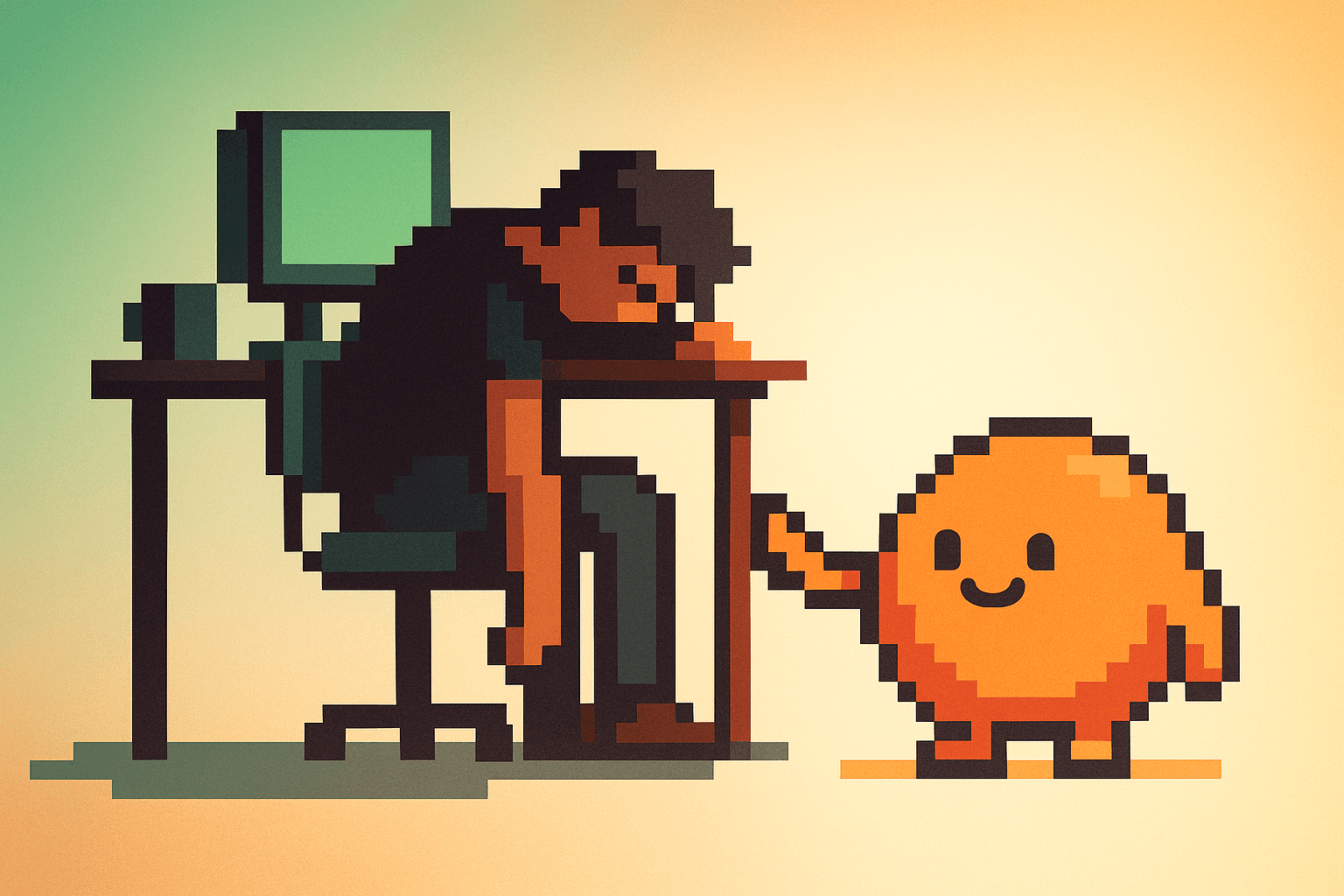
If you write code for a living, you probably sit for 8–12 hours a day. Deep focus is a superpower — but the body you're sitting in didn't evolve to hold one position for that long. The good news: you don't need a gym or an hour you don't have. You need small, frequent movement, and the research is surprisingly clear about why.
What prolonged sitting actually does
"Sitting disease" isn't a catchy exaggeration. Long, unbroken sitting is independently associated with worse metabolic health — even in people who exercise after work. When you stay still, the large muscles in your legs stop contracting, circulation slows, and the enzymes that clear fat and sugar from your blood get sluggish. For developers the bill usually arrives as four specific complaints:
- Rounded shoulders and a stiff neck from leaning toward a screen
- Tight hips and a cranky lower back from a flexed sitting position
- Wrist and forearm strain from hours of typing and mousing
- An afternoon focus crash as circulation and energy dip
Why every hour, not every evening
A single workout can't undo eight hours of stillness, because the harm comes from the duration of sitting, not just a lack of exercise. What helps most is breaking up the sitting itself. Studies on "movement snacks" — one to three minutes of activity every 30 to 60 minutes — show meaningful improvements in blood-sugar response, alertness, and mood compared with sitting straight through and exercising once later.
The best posture is the next posture. Movement, not perfect ergonomics, is what your body is asking for.
The focus bonus
Movement breaks aren't just a health tax you pay against your output — they pay you back in focus. A 60–90 minute deep-work block followed by a short physical reset maps neatly onto how attention actually works: it's a renewable resource that refills faster when you change state. A two-minute set of squats or a stretch does more for your next bug than a third coffee.
How to actually build the habit
The reason developers skip breaks isn't laziness — it's that flow is fragile and a break feels like a threat to it. The fix is to make the break automatic, short, and rewarding instead of a decision you have to make 8 times a day:
- Anchor it to something you already do — a finished commit, a passing test, a merged PR.
- Keep it under three minutes so it never competes with real work.
- Make it bodyweight and desk-side so there's no setup friction.
- Track a streak so the habit compounds and you feel the cost of breaking it.
This is exactly the loop VibeFit is built around: a gentle timer runs while you code, prompts a short routine when you hit the threshold, verifies the reps with your webcam, and rewards the streak. The movement is small. Done every hour, it adds up to a different body — and a sharper one — by the end of the year.
Turn this into a habit
VibeFit runs the timer, picks the routine, and verifies your reps with your webcam — privately, in your browser. Free to start.
Start free